
Dorothy Superdock and Brianna Petrone Get the Word Out on FoodSeq
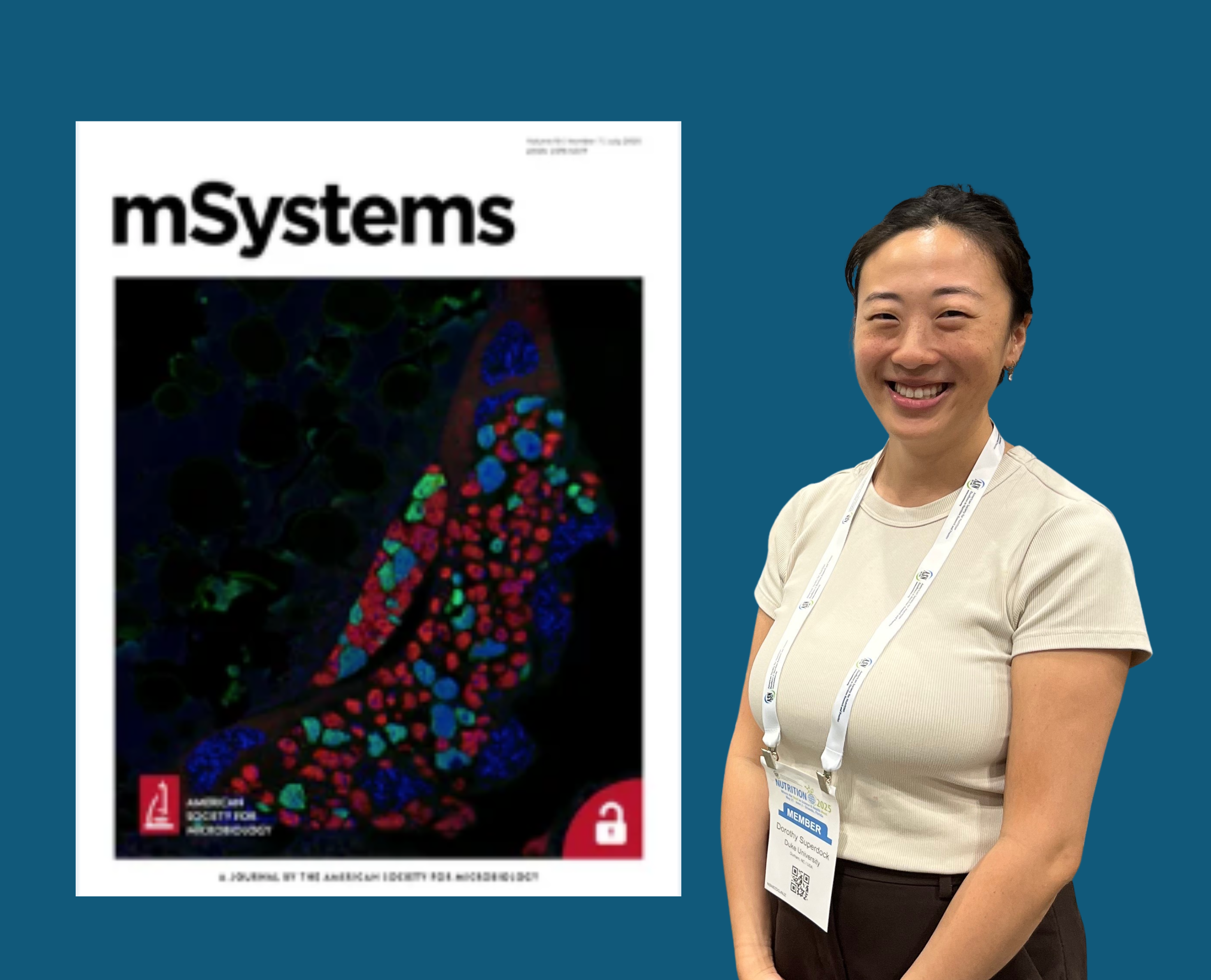
Dorothy Supderdock, a postdoc in the David Lab and co-first author of a new paper in mSystems, says DNA metabarcoding is still a relatively unknown technology in the context of human nutrition.
Since it was first developed, FoodSeq has been leveraged in a variety of studies, whose aims range from assessing dietary interventions to analyzing the health impact of highly processed foods to uncovering what ancient humans consumed. But for as far-reaching as the applications already are, this metabarcoding technology remains under the radar, at least in terms of human nutrition.
“A lot of DNA metabarcoding work came out of the ecology, zoology, and microbial ecology worlds, so the technical considerations and applications were very specific to those purposes and not in the context of studying human dietary patterns,” says Dorothy Superdock, a postdoc in the David Lab. Earlier this year, she and co-first author Brianna Petrone, a former MD/PhD student in the lab who is now a resident physician at Maine-Dartmouth Family Medicine, published a paper in the journal mSystems to illuminate the many ways health and nutrition research can benefit from FoodSeq. “What I'm hoping people take away is an understanding of how this technology can now be adapted and used to answer dietary questions specific to humans.”
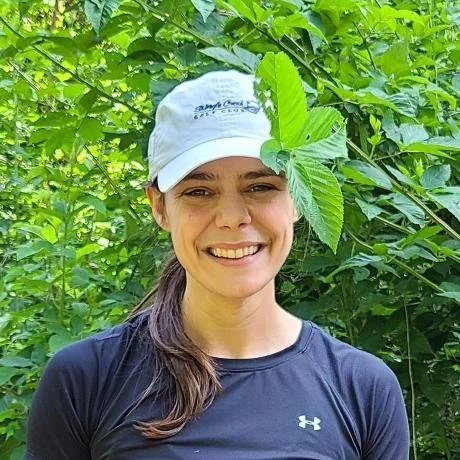
Brianna Petrone, former postdoc at the David Lab, co-first authored the mSystems paper.
While FoodSeq has appeared in multiple papers over the years, Dorothy and Brianna’s mSystems perspective, “From stool to sequence: decoding the human diet with FoodSeq,” marks the first time the technology itself has been the focus, rather than a supplemental tool mentioned as a research method. “This article gives us a venue to explain more of the history and context behind FoodSeq so that people in various fields can appreciate and understand its impact,” she explains.
Within the David Lab, Dorothy is perhaps the researcher best-suited to pen this piece, which also serves as a central hub of information and resources for scientists interested in FoodSeq. Throughout her academic career, Dorothy has taken a multi-disciplinary approach to research, injecting fresh perspectives and new techniques into more established fields of study.
Dorothy earned her PhD in Nutritional Sciences from Cornell University, where she combined a microbiome perspective with traditional nutrition research methods. Her dissertation centered around a human trial in which participants were given different types of dietary fiber with the purpose of identifying factors responsible for differential changes to their gut microbiome.
“I really care about what people are eating and how it affects their health outcomes,” she says. “My dissertation research was a jumping-off point for my postdoctoral work—it caused me to become obsessed with why we couldn't look at diet in the same way we were studying the microbiome.”
The fiber study Dorothy conducted at Cornell relied on dietary recall data, specifically, the Automated Self-Administered (ASA) Dietary Assessment Tool. While it’s considered the gold standard of its kind, the ASA still leaves something to be desired. Not only does it place the burden of responsibility on participants, it’s also highly susceptible to misreporting.
“The frustrating part is that we can easily see the results but in many cases, I just don't know how much to trust them,” she says. Now at the David Lab, Dorothy has incorporated DNA metabarcoding into nutrition research while still using dietary recall data. “I'm not necessarily saying that recalls are bad; I just think we need multiple tools at our disposal,” she adds. “Part of my work is validating FoodSeq and comparing results between those tools to identify the differences.”
In addition to describing various FoodSeq applications, Dorothy’s paper also recounts how the technology was developed. For years, the David Lab’s central expertise was studying the microbiome; the team has used conserved primers surrounding a variable region of DNA to measure microbiome diversity and assess the relationship between changes in diet and changes in the gut microbiome. But researchers soon found an equal challenge was identifying the foods that triggered those changes. As it happened, the same amplicon sequencing could be used to detect and identify residual food DNA in stool.
“We started to apply that concept to the dietary intake space. Instead of identifying the microbes in stool, we’re identifying the foods consumed using the same method,” Dorothy says. “I think this article helps answer many common questions that people are wondering about and would otherwise have to do a lot of digging on their own to find the answers. We tried to compile it all in one place and make it relevant to the human nutrition world.” For example, previous literature hadn’t concluded whether ultra-processed food contains DNA, but using FoodSeq, the David Lab has confirmed that many highly processed foods do, though the DNA may be more degraded.
Now in the third year of her postdoc, Dorothy continues to refine and validate FoodSeq by applying it in clinically relevant settings. “I'm interested in inflammatory bowel disease and celiac disease—areas where people really care about diet as a therapeutic tool. I want FoodSeq to be tested in these contexts where results could be directly translated and make a bigger impact,” she says.
Looking ahead, she plans to continue to enhance dietary recall methodology by incorporating even more approaches. “What I’m interested in doing in the future is combining this genomic technology with other omics tools to get even better at identifying dietary biomarkers from all different angles,” she explains, offering proteomics and metagenomics as two promising avenues.
And with the mSystems paper getting the word out on DNA metabarcoding for dietary data, the ground has been laid for further innovation. “We wrote this paper to take a step back and just really evaluate FoodSeq alongside other current methods, highlight its origins, and underscore its potential capabilities, too,” she says.